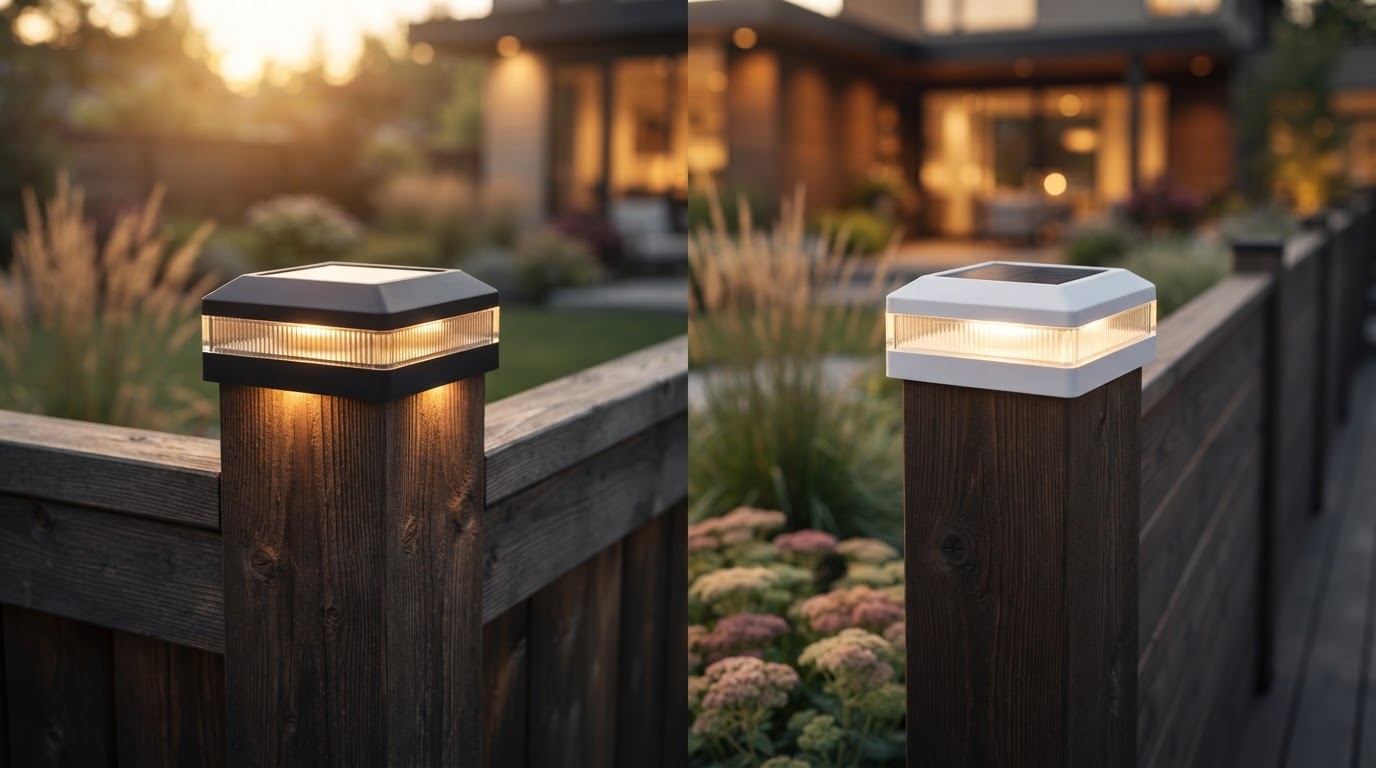
Modern Solar Post Cap Lights: The 4-Step Design Framework
 Jordan HaleStaff Writer
September 7, 2026 — The shift toward minimalist outdoor aesthetics has accelerated the demand for modern solar post cap lights, a trend that Solar Fence Post Lights is currently addressing through high-efficiency architectural fixtures.
I remember the first evening I spent watching the sun dip below the horizon while holding a heavy, powder-coated aluminum cap. The weight of the housing felt substantial, a stark contrast to the flimsy plastic alternatives that often clutter hardware store shelves. Industry data from recent consumer search trends indicates a significant pivot toward integrated lighting solutions, particularly for 4x4 solar post caps which currently see over 22,000 monthly impressions. It turns out that homeowners are no longer satisfied with mere utility; they are looking for fixtures that disappear into the architecture during the day and provide a sophisticated glow at night.
The 4-Step Design Framework
Photo by Sóc Năng Động on Pexels
To achieve a cohesive look, I keep coming back to a specific framework that balances technical performance with visual harmony. The first step involves precise fitment, specifically identifying whether you are working with 4x4 solar post caps or 6x6 solar post lights, as the mounting requirements for vinyl and wood differ significantly. The second step focuses on environmental resilience; modern units must carry a high IP rating to ensure they function as waterproof solar garden post lights through seasonal storms. The third step is the selection of color temperature, where warm white solar fence lights are preferred for residential settings to avoid the clinical feel of high-kelvin LEDs. Finally, the fourth step is ensuring runtime consistency. Reliable units are engineered to provide roughly 8 to 10 hours of illumination, covering the area with a soft downlight that highlights the texture of the fence without causing glare. When I installed these on my own perimeter, the first thing I noticed was how the light pooled at the base of the post rather than scattering into the neighbor's yard. This controlled beam is essential when integrating modern solar pillar lights into landscapes where subtle layering is the goal. For those with specific installations, such as solar vinyl fence lights, the framework requires checking the internal diameter of the cap to ensure a snug, rattle-free fit that resists wind uplift.
Expert tip: When installing solar cap lights for wood posts, always pre-drill your pilot holes slightly smaller than the mounting screws to prevent the pressure-treated timber from splitting while maintaining the waterproof integrity of the light's base.
Selecting the right solar fence post lights involves more than just picking a style; it requires understanding how the hardware interacts with your existing structure. By following this framework and choosing quality Solar Fence Post Lights, you ensure that your outdoor space remains both functional and aesthetically refined long after the sun sets.