Integrating Modern Solar Pillar Lights into Landscapes
 Priya RamanSenior Analyst
September 6, 2026. This analysis explores the technical integration of modern solar pillar lights into contemporary residential architecture. It is designed for homeowners and landscape designers seeking to balance functional security with aesthetic cohesion.
Effective landscape lighting is best understood through a matrix of two primary axes: the functional requirement for safety and the aesthetic requirement for architectural harmony. When selecting modern solar pillar lights, the decision rule is to prioritize the luminaire's footprint relative to its mounting surface. According to recent search trends observed on Google Search Console, a significant portion of the market specifically targets 4x4 solar post caps for standard timber installations, while another segment focuses on solar vinyl fence lights for synthetic materials. The challenge for many properties lies in the transition between horizontal fencing and vertical masonry pillars. Traditional wired lighting often fails to address the isolation of perimeter pillars, creating dark gaps that compromise security. Modern solar pillar lights solve this by operating as independent units, requiring no trenching through established garden beds or hardscaping. Once you see it this way, the choice becomes a matter of matching the light temperature and intensity across the entire perimeter, ensuring that warm white solar fence lights on the rails do not clash with high-output cool white LEDs on the pillars.

Photo by Anne van der Valk on Pexels
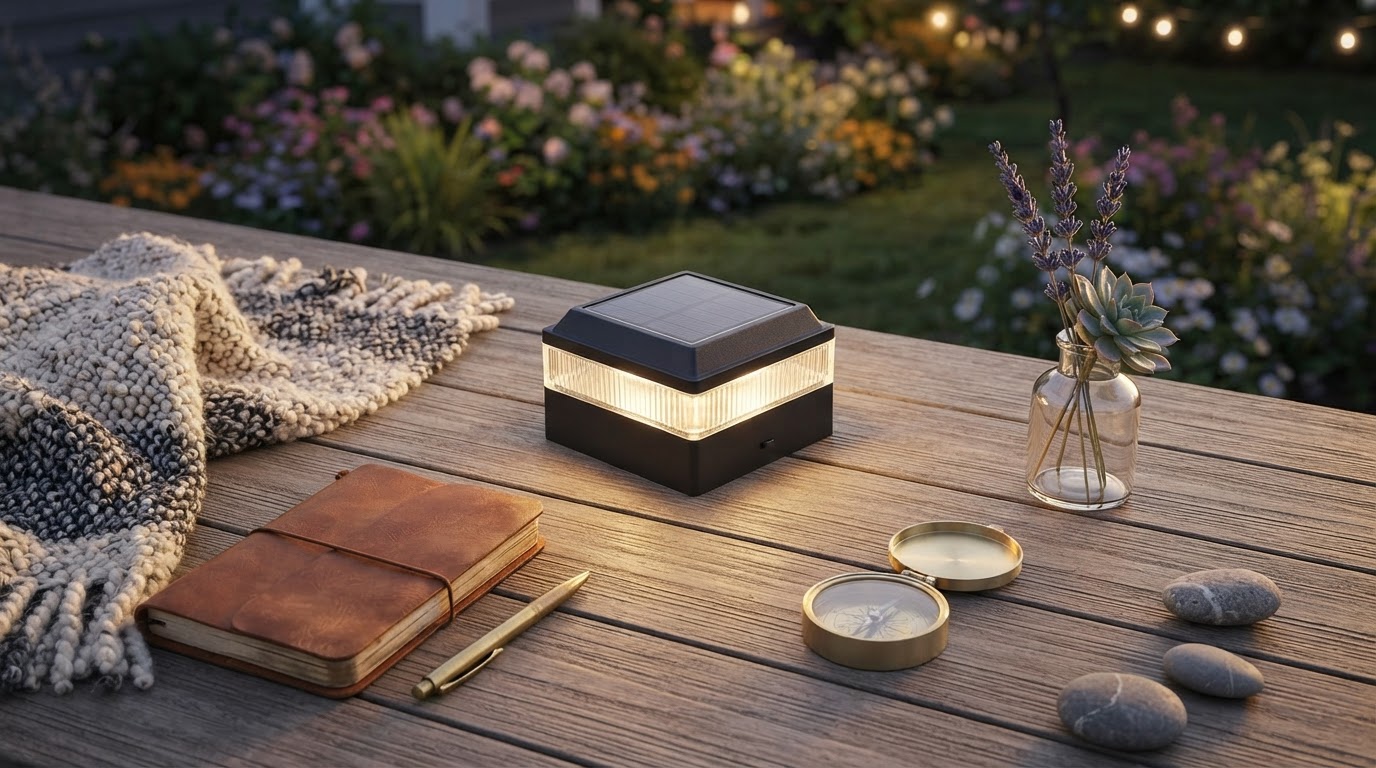
Solar Fence Post Lights addresses these architectural gaps by providing a consistent lumen output across various mounting formats. The hardware is engineered to accommodate the most common dimensions found in residential construction, including the highly sought-after 4x4 solar post caps and the larger 6x6 solar post lights often used for structural pillars or entrance gates. Because these units utilize high-efficiency photovoltaic cells, they maintain a consistent charge even in areas where traditional wiring is cost-prohibitive. The integration of modern solar post cap lights allows for a seamless visual line that guides the eye along the property boundary without the visual clutter of exposed conduit. Technical data indicates that waterproof solar garden post lights are increasingly becoming the standard for durability, particularly in climates prone to heavy precipitation. By utilizing a unified mounting system, Solar Fence Post Lights ensures that the transition from a standard fence post to a decorative pillar maintains a uniform height and light distribution pattern, preventing the "patchy" illumination often seen in DIY lighting projects.
Selecting the correct pillar lighting requires a structured decision framework based on the substrate and the intended light throw. Think of it as a matrix of durability versus decorative impact. For vinyl or composite materials, the thermal expansion of the post must be considered when selecting the fixture base. For masonry pillars, the focus shifts to the light's downward dispersion, which highlights the texture of the stone or brick. Use the following checklist to evaluate your site requirements:
- Verify the exact dimensions of the mounting surface, distinguishing between nominal and actual sizes for 4x4 or 6x6 posts.
- Match the Kelvin temperature of the pillar lights to existing warm white solar fence lights to maintain a cohesive nighttime environment.
- Confirm the IP (Ingress Protection) rating for waterproof solar garden post lights to ensure longevity against ground-level moisture.
- Assess the solar access window for the pillar location, ensuring at least six hours of direct sunlight for optimal battery performance.
- Determine if the pillar requires a flat-mount adapter or a wrap-around cap design based on the architectural style of the column.
Shop Solar Fence Post Lights here.