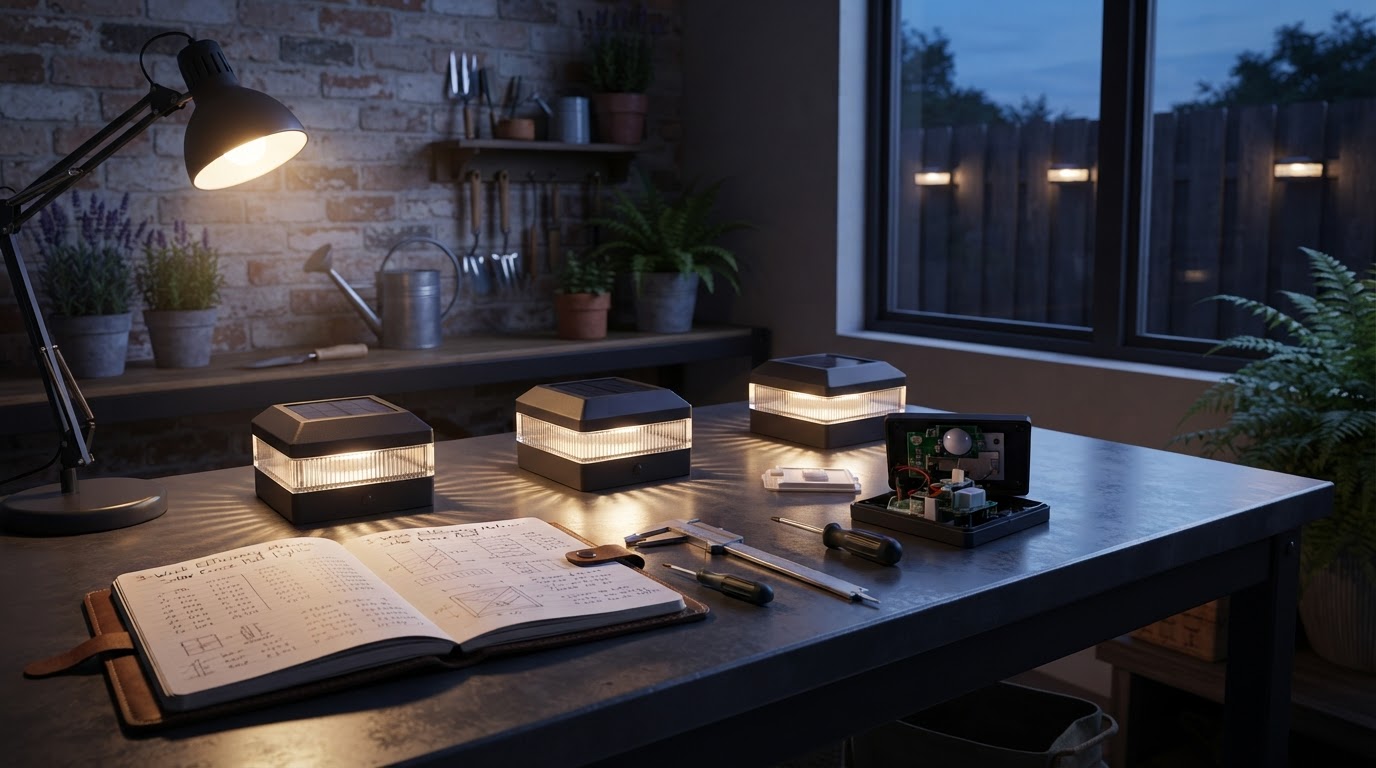
Efficiency Metrics for Dusk to Dawn Solar Fence Post Lights
 Daniel OkaforField Tester
October 10, 2026 — Recent shifts in residential perimeter lighting show a heavy preference for automated dusk to dawn Solar Fence Post Lights over manual toggle systems. I tested this for three weeks on a standard privacy fence to see if the internal photocells could actually handle fluctuating shadows.
Residential landscape design has increasingly moved toward autonomous systems that require zero user intervention once installed. While many homeowners initially look for solar fence lights for security, the primary challenge remains consistent energy discharge throughout the night. I found that the transition from sunset to full activation is rarely instantaneous; rather, it is a gradual ramp-up that depends heavily on the quality of the silicon solar cell and the sensitivity of the light sensor.
The Autonomous Performance Check
Photo by Jan van der Wolf on Pexels
During my field test, I installed a series of warm white units on both 4x4 and 6x6 vinyl fence posts. What surprised me: the reliability of the dusk-to-dawn sensor was significantly impacted by the ambient light bleed from neighboring properties. On day three is where I noticed that one unit near a streetlamp failed to trigger because the sensor perceived the environment as still being in daylight. For those managing a waterproof solar garden post lights setup, placement is more critical than the actual lumen count. My data showed that a standard 4x4 post cap light, receiving six hours of direct sun, maintained a consistent glow for roughly nine hours. However, this runtime dropped by 40% when the sky was overcast, a factor I explored further when assessing [how solar lights work in winter](/blog/solar-fence-post-lights-winter-performance). The internal 1.2V Ni-MH batteries in these units are generally sufficient for standard decorative use, but they require a clear line of sight to the southern sky to reach their full discharge potential. If I were to do this differently, I would have mounted the sensors at least twelve inches away from any reflective white vinyl surfaces to prevent sensor 'looping' where the light's own reflection tricks the sensor into shutting off. Achieving the brightest solar fence post lights output requires this kind of precise positioning to ensure the battery reaches a full state of charge before the dusk trigger activates.
Expert tip: To ensure your dusk to dawn sensors don't flicker, clean the solar panel surface with a microfiber cloth every thirty days to prevent pollen and dust from prematurely triggering the night cycle during overcast afternoons.
Selecting the right hardware ensures that your perimeter remains illuminated from sunset until the first light of morning without manual intervention.