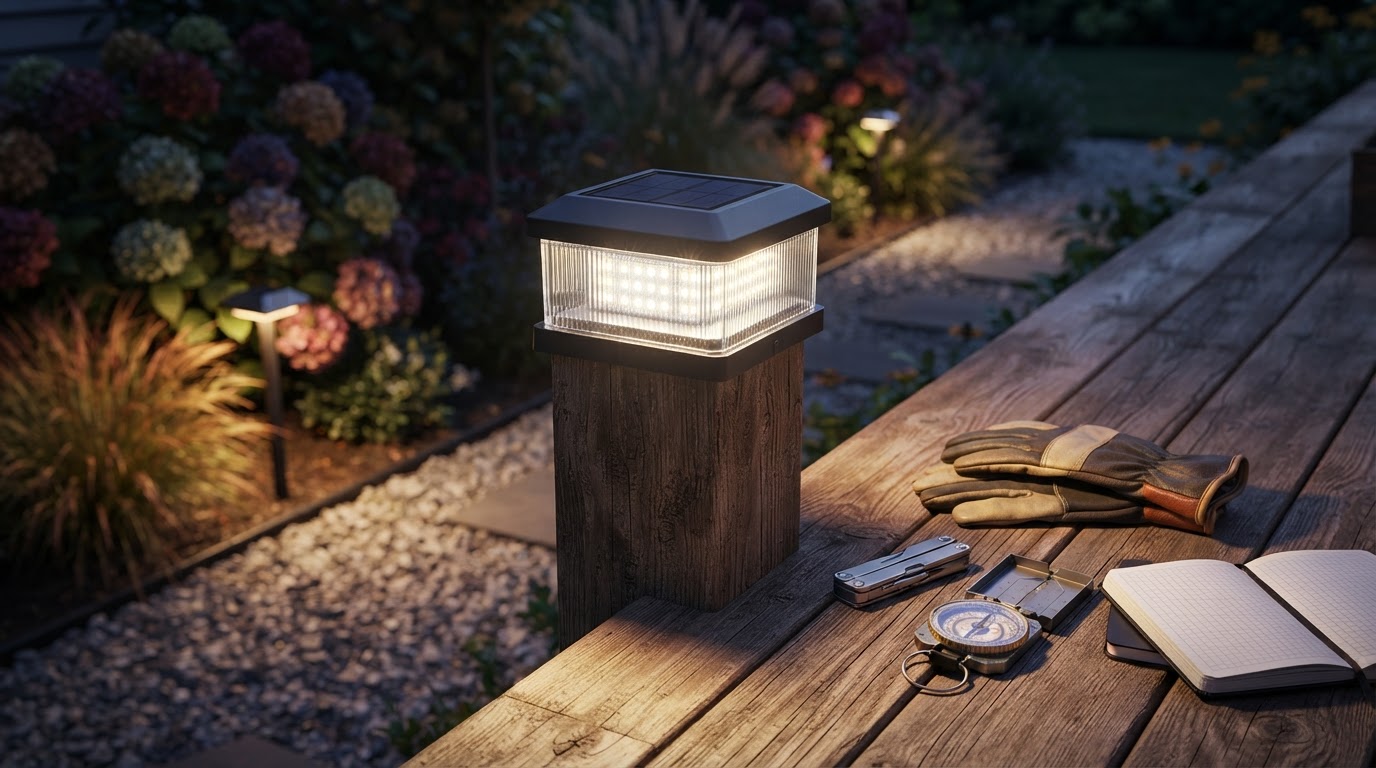
Maximizing Brightness in Solar Fence Post Lights
 Sam VasquezBuying Guide Lead
October 8, 2026. This guide examines the technical requirements for achieving high-intensity illumination using fence-mounted solar fixtures. It is intended for homeowners who prioritize visibility and safety over purely decorative accent lighting.
The Challenge of Outdoor Illumination Levels
When I look at the current market for perimeter lighting, the most common complaint is that the output simply isn't enough to see by. Most standard units are designed for ambiance rather than utility. Achieving high brightness requires a delicate balance between photovoltaic efficiency and battery storage capacity. Without a significant surface area for the solar panel, a light cannot generate the wattage necessary to drive high-lumen LEDs for an entire night. This becomes particularly difficult during shorter days, which is why understanding how solar lights work in winter is essential for anyone expecting consistent performance year-round. If the battery isn't topped off by mid-afternoon, the brightness will noticeably dip by midnight.
I have found that many people mistake quantity for quality. They install twenty low-lumen stakes when four high-output post caps would have done a better job. The physics of these devices dictates that brightness is a function of the milliamp-hour (mAh) rating of the internal battery and the quality of the monocrystalline solar cells. If you are working with a privacy fence, the height of the installation also plays a role in how light disperses across the ground. According to the Department of Energy, proper placement and cleaning of solar panels can improve energy absorption by up to 25%, which directly impacts the sustained brightness of the LED. Skip this if you are only looking for a dim marker light to show where a path ends; high-brightness models require more direct sun and a larger footprint on the post.
Optimizing Solar Fence Post Lights for Maximum Output
To get the most light out of a solar fixture, you have to look at the specific hardware specs. In my experience, the standard solar fence post lights that perform best are those that utilize 4x4 or 6x6 footprints, as these larger caps accommodate bigger solar arrays. When you increase the panel size, you increase the charging current. This allows the light to maintain a higher lumen count without exhausting the battery halfway through the night. For those using these for safety, [solar fence lights for security](/blog/solar-fence-lights-for-security) need to stay bright enough to trigger or illuminate motion, which requires a robust internal capacitor.
Between these two options—a standard warm white accent light and a high-output cool white light—I’d go with the cool white for pure visibility. Warm white LEDs often appear dimmer to the human eye even if the lumen count is identical. If you're on a budget, you might be tempted to buy the smaller 2x2 units, but I've found they rarely provide enough throw to light up a walkway. You also need to ensure the casing is durable; I always recommend checking that you are using waterproof solar garden post lights to prevent moisture from fogging the lens. A fogged lens can cut your light output by half, rendering even the most powerful LED ineffective. For consistent brightness from sunset to sunrise, look for [dusk to dawn solar post lights](/blog/dusk-to-dawn-solar-post-lights) that feature intelligent power management, which dims the light slightly when the battery is low to ensure it doesn't go dark prematurely.
A Framework for Selecting High-Output Fixtures
Choosing the right light involves more than just looking at a box. You need to match the fixture to the physical dimensions of your fence and the specific light requirements of your property. If you have a vinyl fence, you'll need specialized brackets or caps that won't crack the material. Here is what I’d actually buy: a fixture with a minimum 600mAh battery and a monocrystalline panel. Monocrystalline panels are more efficient in low-light conditions than polycrystalline versions, which is a non-negotiable for me.
When evaluating your options, use this checklist to ensure you aren't buying a glorified candle:
- Verify the post size: Ensure the base fits 4x4 or 6x6 posts without gaps that allow water ingress.
- Check the lumen rating: Look for a minimum of 15-20 lumens for visibility, or 5-10 for simple decoration.
- Inspect the panel type: Monocrystalline panels are the gold standard for high-output charging.
- Battery capacity: A higher mAh rating generally translates to longer-lasting brightness throughout the night.
- Weatherproofing: Look for an IP65 rating to ensure the internal electronics stay dry and the lens stays clear.
Shop Solar Fence Post Lights here