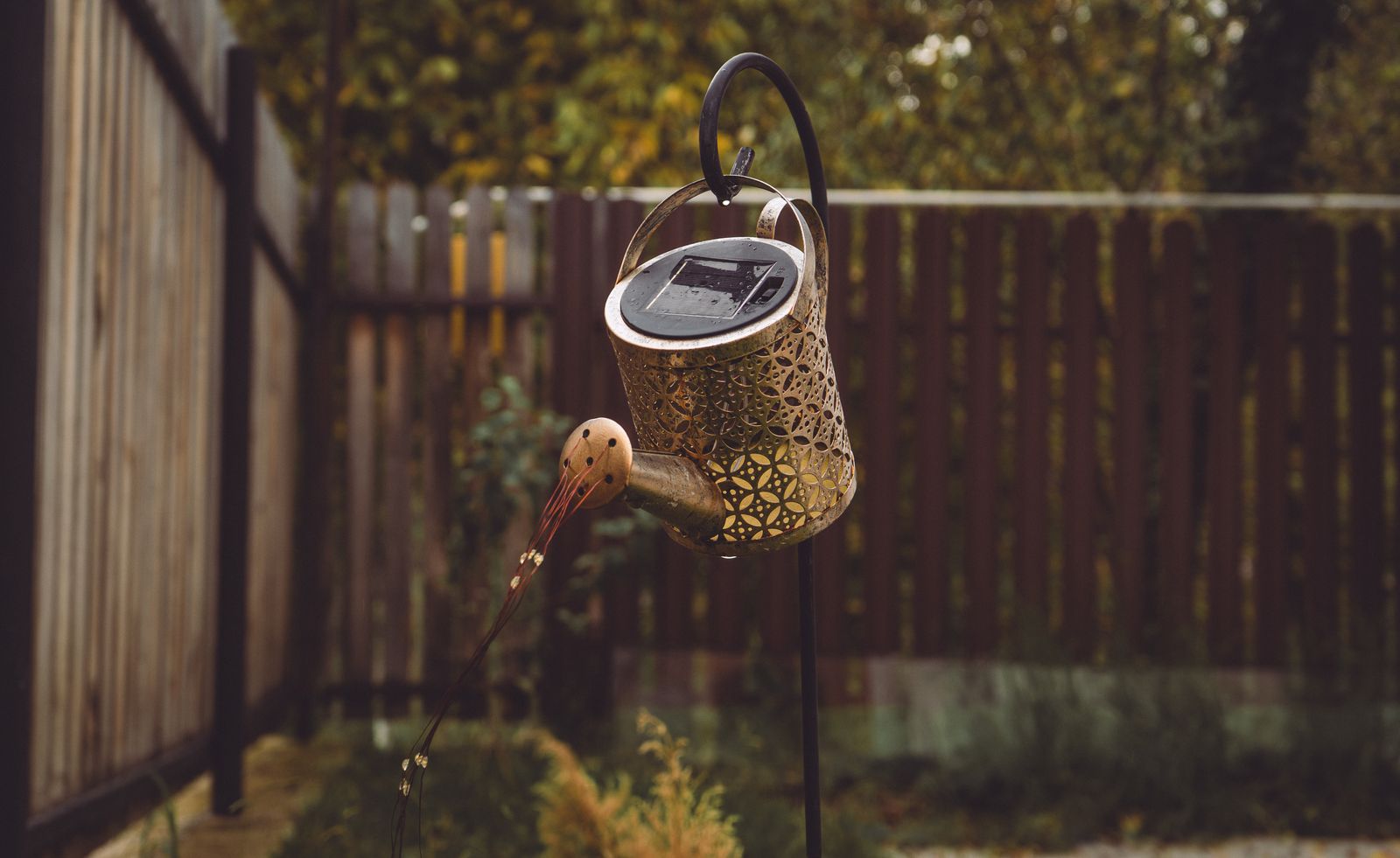
Framing Your Yard: Perimeter Lighting Strategies Using Color-Changing Solar Post Lights
Frame a yard with color-changing solar post lights by putting post caps on the posts that already draw the property line: corners, gates, and sunlit fence newels. Use one 3-color-changing mode down each run so the perimeter reads as a single edge. MATULSA solar fence post lights sit on wood or vinyl, in black for 4 in x 4 in posts or white for 3.5 in x 3.5 in or 4 in x 4 in posts, in 4-packs or 8-packs.
The perimeter is the posts, not the grass
Landscape lighting ideas often drift into path stakes and flood heads. This strategy stays on solar fence post lights. The fence already frames the yard. Caps make that frame visible after dark. Grass, beds, and walks can stay dark if the posts mark where the property turns.
Walk the boundary at dusk without extra light. Note where a corner disappears, where a gate reads as a hole, and where a long bay of fence vanishes into hedge. Those posts are the first caps. Interior deck posts can wait if the goal is the property line.
Gardens, patios, and porches that sit on the perimeter count. A garden post in the middle of a bed is not a perimeter post unless it is actually on the line.
Corners, gates, then even bays
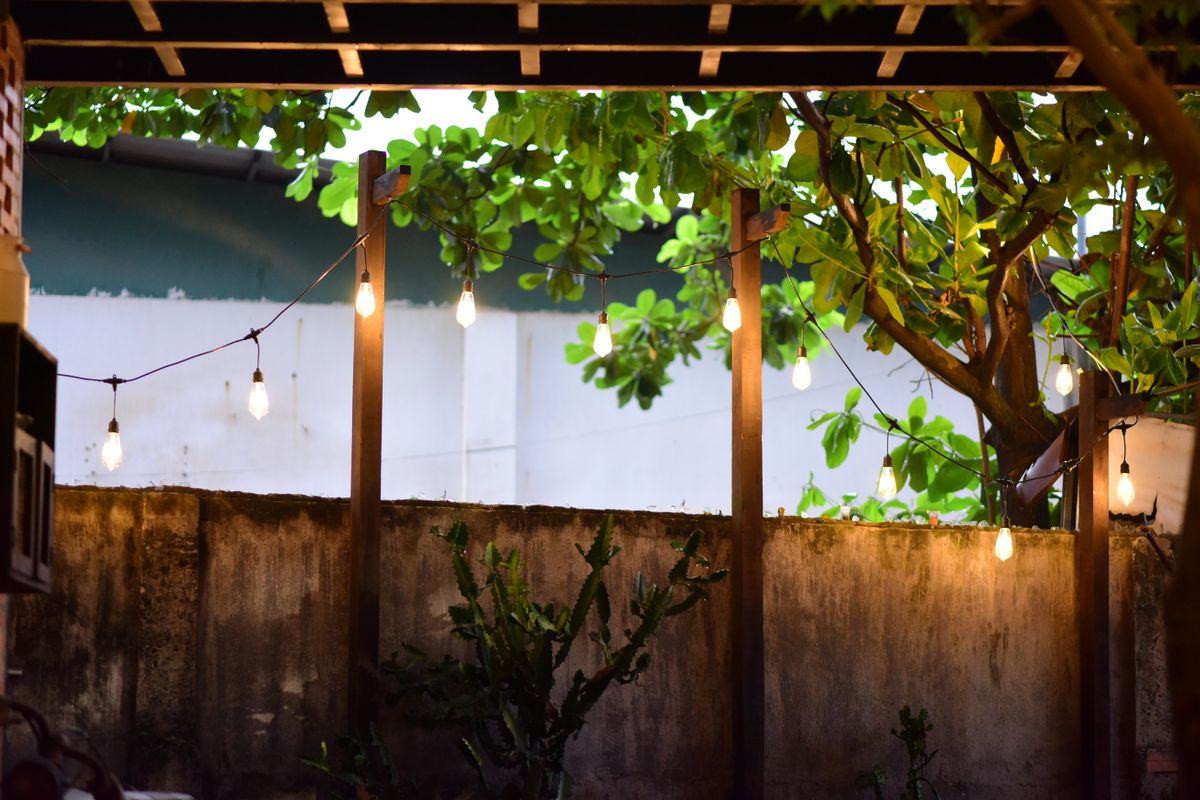
Photo by Sóc Năng Động on Pexels
Corners do more work than mid-rail posts. Two planes meet. A cap there turns the yard into a shape instead of a smudge. Gate posts are the next pair: they show where people enter. After that, space remaining caps along long runs so a dark gap does not swallow the line.
Even spacing is a post count, not a tape every six feet through empty rail. If posts are already eight feet apart, lighting every post is one look; lighting every other post is another. Do not invent a new post in the middle of a bay. Add a cap to an existing post or leave the bay darker.
Sun decides the map as much as geometry. A north corner under a tree will not charge. Skip it or prune for sky. A south gate in open lawn is a high-value cap.
Color-changing as a perimeter language
3-color-changing light is useful when the whole run agrees. One mode says fence. Mixed modes say leftover decorations. For a quiet night, pick the calmest mode and leave it. For a gathering, switch the same run together so the frame stays a frame.
Black housings recede by day on dark wood fences. White housings read as trim on vinyl. Either can carry the same nighttime color mode. Do not mix housing colors on one short run unless the fence materials already change there.
Waterproof outdoor caps handle rain on the line. Wind still lifts a loose cap on a corner first, because corners take more fetch. Seat every perimeter cap as if that post is the windward one.
Pack the line without lighting the neighbor’s yard
A 4-pack covers four high-value posts: two gate posts and two street-facing corners is a classic small-lot frame. An 8-pack can finish a short rectangular fence if eight tops see sky. Larger lots need more than one pack, still skipping shade.
Aim the idea at the posts, not at the neighbor’s windows. Post caps mark tops. They are not floods. If a neighbor is close, a consistent, moderate run of caps is easier to live with than a random bright object on one corner.
Solar powered means the perimeter does not need a trench along the fence. That is the strategy’s main cost control: the line you already own, plus caps, plus sun.
Where to spend the first caps on a perimeter
| Post type | Why it frames the yard | Skip if | | --- | --- | --- | | Corners | Turns the line into a shape | Panel sits in deep shade | | Gate posts | Marks entry | Gate is under a solid roof | | Street-facing line | Reads from the road | Hedge fully covers the tops | | Long side-yard run | Stops a dark gap | Posts are hidden and unused | | Interior garden stub | Not the property line | It is not actually on the perimeter |
A simple two-night layout
Night one: cap the corners and the gate only. Walk the yard. See whether the frame is already enough. Night two: add caps to the darkest remaining sunlit posts from a 4-pack or 8-pack. Stop when the line is readable, not when every post is occupied.
If a deck sits on the perimeter, those newels are part of the frame. If the deck sits inside the fence, treat deck caps as a second zone with the same color mode or a quieter one, still as post caps on posts.
Measure 3.5 versus 4 before the second pack. A perimeter with mixed vinyl and wood is two size lists, not one impulse 8-pack.
Perimeter framing checklist
- [ ] Walk the fence at dusk; mark missing corners and gates.
- [ ] Confirm each candidate top sees the sky.
- [ ] Measure 3.5 or 4; assign black or white caps.
- [ ] Set one 3-color-changing mode for the whole run.
- [ ] Seat corner caps firmly; they take the wind.
- [ ] Add a 4-pack or 8-pack only for remaining dark, sunlit posts.
Frequently asked questions
Should every fence post get a cap?
No. Corners, gates, and the darkest sunlit bays first. Extra posts are optional.
Can color-changing lights look busy on a property line?
Yes if modes differ along the run. Use one mode so the perimeter reads as one edge.
Do these replace landscape spotlights?
No. They are solar post caps for the posts that already frame the yard.
What if the back fence is all shade?
Do not fake a solar perimeter there. Light the sunlit sides and the gate; leave the shaded line dark or use a different, non-solar plan.
Is a 4-pack enough to frame a yard?
It can frame a small lot if those four are the two gate posts and two open corners. Larger lines need more packs.
Related reading
Setup, fit, and weather pages that support a perimeter of post caps.
- 3-step setup for solar fence post lights without wiring
- 3.5x3.5 vs 4x4 solar post cap lights for wood and vinyl
- securing solar fence post lights against wind and rain
- buyer’s guide to weather-resistant solar post lights
What to do next
Tonight, walk the fence and mark corners and gates that disappear. Tomorrow, measure those tops, match black 4x4 or white 3.5/4 color-changing solar post lights, and cap only the sunlit frame. That is perimeter strategy: the property line, made visible, without turning the grass into a lighting plan.
Cover photo by Gurgenidze G on Pexels.