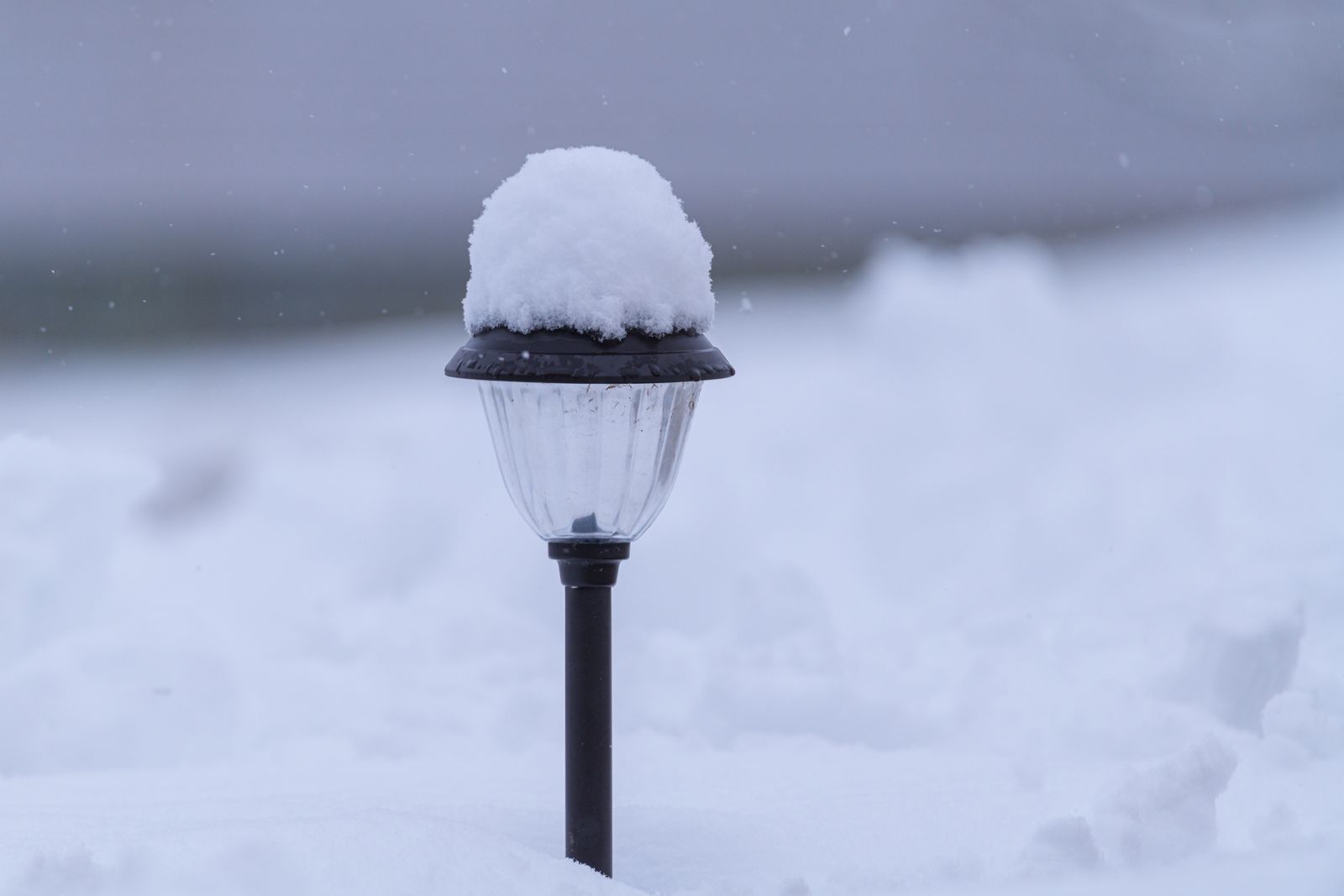
How to Protect Solar Fence Post Lights From Heavy Rain & Winter Frost
Many homeowners believe an IP44 or IP65 waterproof rating guarantees complete protection against harsh winter frost and driving rain. In reality, freeze-thaw cycles expand trapped moisture into micro-cracks, and sub-zero temperatures permanently degrade solar battery storage capacity.
To protect solar post lights during heavy rain and winter frost, apply clear neutral-cure silicone along upper housing seams, clear snow off panels regularly, and store rechargeable batteries indoors only when ambient temperatures drop below 14°F (-10°C).
Timeline: Seasonal Weatherproofing Preparation Schedule
- Early Autumn (September - October) — Perform initial physical inspection. Clean solar panels, clear lower weep holes, and inspect housing perimeter for gaps.
- Late Autumn (November) — Apply neutral-cure silicone to upper housing joints and apply dielectric grease to internal battery contacts.
- First Frost Warning — Verify battery compartment seal integrity. Ensure no water is pooling inside the post cap base.
- Deep Winter (December - February) — Clear snow and ice from solar panels after every storm using a soft cloth or foam brush. Monitor battery runtime.
- Extreme Freeze Snap (<14°F / -10°C) — Remove rechargeable batteries and store them indoors at room temperature to prevent chemical freeze degradation.
- Early Spring (March - April) — Reinstall stored batteries, wash away hard water mineral deposits from lenses, and re-inspect silicone seals.
Routine Weather Maintenance Schedule for Outdoor Solar Lights
Photo by Vitali Adutskevich on Pexels
- Monthly (Year-Round) — Wipe top solar panel lenses with warm water and a microfiber towel to remove dirt, dust, and pollen buildup.
- Bi-Monthly (Winter) — Inspect bottom drainage weep holes with a small toothpick or nylon bristle to clear spider webs and organic debris.
- After Heavy Rainstorms — Check plastic lamp housings for internal fogging or water accumulation; dry internally if condensation appears.
- Post Snowfall / Freezing Rain — Gently sweep away snow layers from solar glass; do not use metal ice scrapers or chemical de-icers.
- Semi-Annually (Spring & Autumn) — Open battery compartment, check contact springs for corrosion, and re-apply dielectric grease to metal contacts.
Troubleshooting Moisture Ingress & Winter Power Failures
| Symptom | Root Cause | DIY Fix | Prevention Strategy | | --- | --- | --- | --- | | Internal lens fogging / moisture beads | Temperature swings creating condensation inside unsealed housing | Disassemble cap, dry internal chamber with microfiber cloth, let sit in dry sun for 4 hours | Ensure bottom weep holes are unblocked so trapped water vapor can escape naturally | | Light turns off after 1–2 hours in winter | Cold degradation of battery chemical activity or partial snow cover on solar panel | Brush off snow; charge battery in a dedicated wall charger overnight to rebalance cells | Store batteries indoors during extended sub-zero temperature snaps below 14°F (-10°C) | | Light flickers or won't turn on after storm | Water entered battery compartment causing surface corrosion on contact springs | Scrape off white/rust powder with fine sandpaper, wipe with isopropyl alcohol, re-seat battery | Coat battery terminal contact points with a thin layer of neutral dielectric grease | | Fixture stays on during daytime | Water ingress on internal light sensor circuit board causing false darkness trigger | Remove battery, dry entire circuit board with hair dryer on cool setting, reassemble | Seal upper housing perimeter joint with 100% neutral-cure silicone sealant |
If your solar post lights experience water buildup or fail to illuminate during winter, use this diagnostic guide to isolate and resolve the issue.
5 Mistakes Homeowners Make During Winter & Storm Seasons
Avoid these common maintenance errors that can damage plastic light housings and shorten fixture lifespans:
Four-Season Solar Light Protection Calendar
| Season | Focus Area | Key Maintenance Task | Recommended Materials | | --- | --- | --- | --- | | Spring (Q1) | Recommissioning & Cleansing | Remove hard water stains from lenses, reinstall winter-stored batteries, test 3-color LED selector switches. | Distilled vinegar, warm water, microfiber cloth | | Summer (Q2) | Heat & UV Defense | Inspect clear plastic for UV clouding, ensure tree canopy growth isn't blocking direct sun exposure. | Pruning shears, plastic UV protectant wipes | | Autumn (Q3) | Rain & Storm Sealing | Seal top perimeter housing seams, clear fallen leaf debris from panel tops, check fitment screws. | Neutral-cure clear 100% silicone, cotton swabs | | Winter (Q4) | Freeze & Snow Protection | Sweep snow from panels after storms, pull batteries indoors during severe sub-zero cold waves. | Soft bristle foam brush, dielectric contact grease |
Plan your yard maintenance using this season-by-season guide for long-lasting solar post illumination.
Frequently Asked Questions: Moisture & Winter Care
What is the short answer on How to Protect Solar Fence Post Lights From Heavy Rain & Winter Frost? Many homeowners believe an IP44 or IP65 waterproof rating guarantees complete protection against harsh winter frost and driving rain. In reality, freeze-thaw cycles expand trapped moisture into micro-cracks, and sub-zero temperatures permanently degrade solar battery storage capacity.
How do you choose between the options in How to Protect Solar Fence Post Lights From Heavy Rain & Winter Frost? In reality, freeze-thaw cycles expand trapped moisture into micro-cracks, and sub-zero temperatures permanently degrade solar battery storage capacity.
What should you do next? To protect solar post lights during heavy rain and winter frost, apply clear neutral-cure silicone along upper housing seams, clear snow off panels regularly, and store rechargeable batteries indoors only when ambient temperatures drop below 14°F (-10°C).
Timeline: Seasonal Weatherproofing Preparation Schedule - Early Autumn (September - October) — Perform initial physical inspection.
What should you do next? To protect solar post lights during heavy rain and winter frost, apply clear neutral-cure silicone along upper housing seams, clear snow off panels regularly, and store rechargeable batteries indoors only when ambient temperatures drop below 14°F (-10°C).
Common solutions for cold-weather operating challenges and rainy climate maintenance.
Your Action Plan for Season-Proofing Solar Post Lights
Your decision: If your local winter temperatures regularly plunge below 14°F (-10°C), plan to pull rechargeable batteries indoors while leaving sealed light housings mounted on fence posts. For milder winter climates, perform an autumn seam seal and keep fixtures running year-round.
Do this next: Inspect solar cap top seams today, clear fallen leaf debris from panels, and apply a thin bead of clear neutral-cure outdoor silicone around the upper housing joint.
- Read next: Understanding Solar Post Light Waterproof Ratings
- Read next: Troubleshooting Solar Fence Lights Dying Fast in Winter
For all-weather durability, consider MATULSA 3-Color Changing Waterproof Solar Post Cap Lights available in 4x4 and 3.5x3.5 post fitment options.
Take action today to protect your outdoor lighting investments before seasonal weather changes cause damage.
Key Takeaways for All-Weather Solar Fence Post Light Care
- Neutral-cure 100% silicone is the safest sealant for plastic post light housings; avoid acetoxy acid-cure silicones.
- Keep bottom weep holes clear so internal vapor and condensation can drain naturally.
- Clear snow accumulation promptly with a soft foam brush to maintain daytime solar charging.
- Apply dielectric grease to battery terminal contacts to stop rust and oxidation in damp climates.
- Store batteries indoors during severe freeze snaps below 14°F (-10°C) to prevent permanent capacity loss.
Weatherproofing Sealants & Protective Coatings Compared
Photo by ~ angelkwill ~ on Pexels
| Sealant / Compound | Plastic Compatibility (ABS/PC) | Cold Flexibility (-20°F) | Waterproofing Rating | Primary Outdoor Use Case | | --- | --- | --- | --- | --- | | Neutral-Cure 100% Silicone | Excellent (Safe for all plastics) | High (Stays flexible, won't crack) | Impermeable Water Seal | Sealing upper housing seams and solar panel perimeter joints | | Acid-Cure (Acetoxy) Silicone | Poor (Causes clouding & brittleness) | Moderate (Can detach over time) | Impermeable Water Seal | Do NOT use on solar post caps or plastic lenses | | Dielectric Grease (Silicone Paste) | Excellent (Safe for synthetic rubbers) | High (Prevents freeze lock) | Moisture Repellent Barrier | Coating battery contact springs and metal terminal points | | Clear Acrylic UV Spray | Moderate (Requires light application) | Low (Can hairline crack in deep freeze) | Water Resistant Spray | Restoring aged, yellowed plastic solar lenses in summer |
Selecting the right maintenance chemical is critical. Using the wrong product can degrade polycarbonate lenses or corrode internal wiring.
Decision Guide: Winterize On-Post vs. Bring Indoors
Base your winterization plan on your area's minimum winter temperature and seasonal sunlight hours.
Best choice for
- Leave Installed Year-Round (Outdoor Winterization) — Best for USDA Hardiness Zones 7–11 where winter temperatures stay above 14°F (-10°C). Sealing top joints and sweeping snow keeps lights fully operational.
- Indoor Battery Storage Only (Fixture Left Mounted) — Best for USDA Zones 4–6 where sub-zero freezes occur. Pulling batteries saves cell life while leaving cap housings to protect post tops.
- Complete System Indoor Storage — Best for Alpine / High Latitudes with heavy snow accumulation exceeding post heights for weeks at a time.
- Avoid leaving unsealed post caps outside if torrential rain is followed immediately by rapid hard freezes.
- Avoid using solvent-based automotive sprays or WD-40 on battery contacts, as solvents degrade ABS plastic housings.
- Battery Swapping — Swap standard solar NiMH rechargeable batteries with fresh pre-charged units in deep winter to maintain full nighttime brightness.
Post Size & Material Weather Fit Matrix
| Post Material & Size | Thermal Expansion Behavior | Moisture Ingress Risk | Recommended Mounting Sealing Method | Ideal MATULSA Cap Fit | | --- | --- | --- | --- | --- | | 3.5" x 3.5" Nominal Wood Post | Absorbs rainwater, swells up to 4% in high humidity | High (Water pools at cap base interface) | Leave bottom lip uncaulked; secure with side screws into wood | White 3-Color Cap (Fits 3.5" x 3.5") | | 4.0" x 4.0" Standard Wood Post | Expands with rain; shrinks during dry winter cold | Moderate to High | Apply silicone seam ring on cap top; ensure lower drain clearance | Black or White 3-Color Cap (Fits 4" x 4") | | 4.0" x 4.0" Vinyl Fence Sleeve | Expands under summer sun; contracts sharply in freeze | Low (Non-porous, but gaps open in winter) | Use internal adapter base; do not over-tighten vinyl side mounting screws | White 3-Color Cap (Universal 3.5" / 4") | | 4.0" x 4.0" Composite Deck Post | Minimal moisture absorption; moderate heat expansion | Low to Moderate | Mount base adapter securely; line upper joint seam with clear silicone | Black 3-Color Cap (Fits 4" x 4") |
Different post materials react differently to weather. Wood swells when wet, while vinyl expands under direct heat. Select sealant methods that account for your post specifications.
Regional Climate Guidance: Rain, Freeze & Coastal Preparation
Tailor your weatherproofing routine to your specific regional conditions across the United States.
Autumn & Pre-Storm Defense Inspection Checklist
- [ ] Inspect top solar panel perimeter for cracked silicone or gaps.
- [ ] Wipe solar glass/polycarbonate lens clean with water and mild dish soap.
- [ ] Verify that bottom drainage weep holes are open and free of dirt or spider webs.
- [ ] Open battery compartment to check for moisture, rust, or powdery white corrosion.
- [ ] Apply dielectric grease to battery contact springs if located in high-humidity regions.
- [ ] Ensure mounting base screws are snug without over-tightening into vinyl or wood post caps.
- [ ] Check that surrounding trees are trimmed back to maximize low winter sunlight exposure.
Related Guides on Solar Lighting Maintenance & Weatherproofing
- Solar Fence Post Lights for Modern Vinyl Fencing
- The Ultimate Buying Guide for Solar Fence Post Lights: Sizing, Colors, and Pack Selection
- How to Weatherproof Solar Fence Post Lights for Severe Winter and High Winds
Recommended All-Weather Solar Post Cap Lights
Select from engineered, weather-resistant MATULSA solar post cap lights designed for year-round outdoor performance.