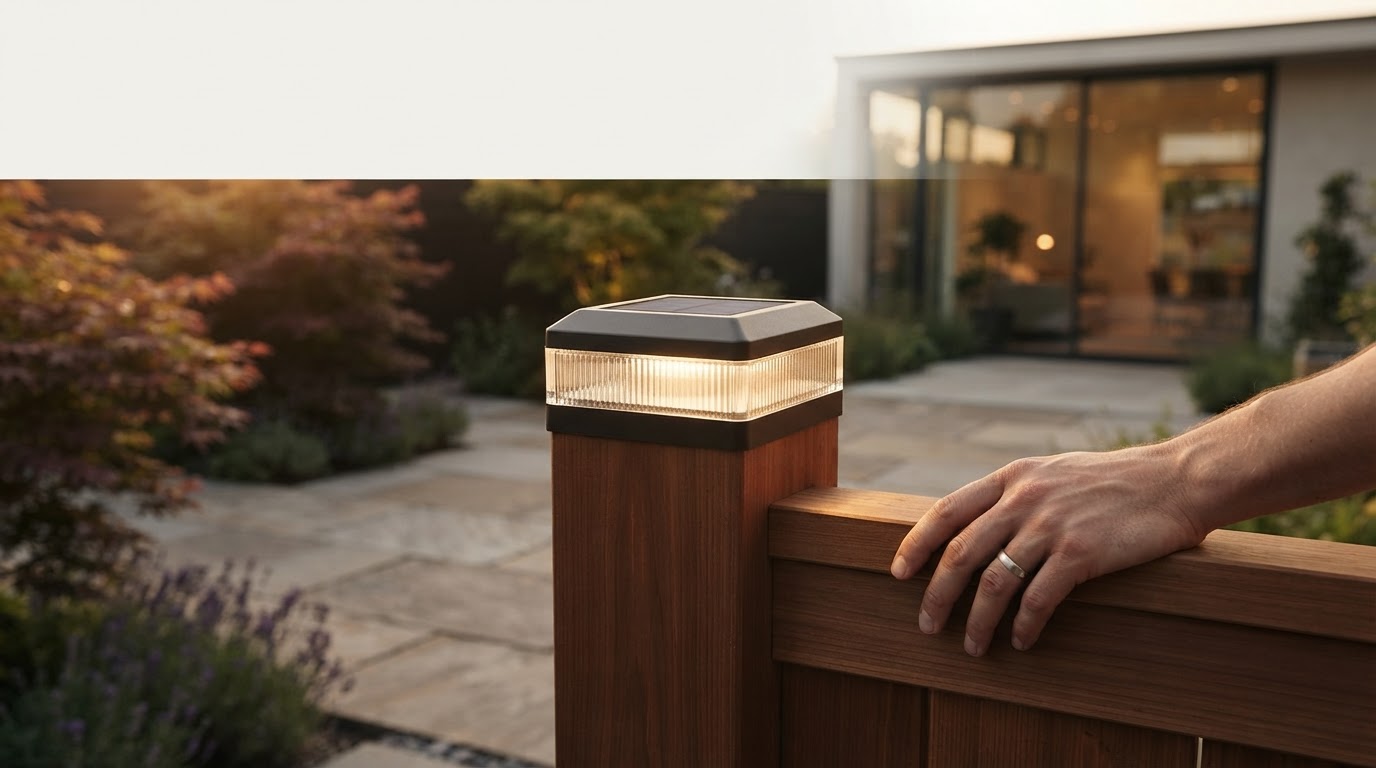
Modern Solar Pillar Lights Framework for Privacy Fencing
 Maya ChenContributing Editor
October 2, 2026 — The shift toward minimalist residential aesthetics has accelerated the demand for streamlined Solar Fence Post Lights that integrate directly into structural pillars rather than mounting as external fixtures. While the market pushes decorative aesthetics, the functional requirement for high-performance privacy lighting remains underserved by standard retail units.
The conventional wisdom says that ambient lighting is sufficient for perimeter security, but internal data from Solar Fence Post Lights indicates that consumers are increasingly prioritizing specific technical thresholds over visual design. According to recent search trends, users are moving away from generic plastic caps toward high-durability, waterproof solar fence lights that can withstand localized microclimates without internal condensation. This pivot suggests that reliability is finally outpacing low-cost accessibility in the consumer mindset.
The Technical Performance Framework
Run the math: a standard 4x4 or 6x6 post cap must deliver a minimum light spread that covers the vertical surface of the fence to eliminate blind spots. Most modern solar pillar lights currently circulating in residential discussions fail to provide the necessary lumen density for true security applications. To meet the requirements for modern solar fence lighting ideas, a unit must possess an IP65 or higher rating to ensure long-term functionality in high-moisture environments. The hardware currently favored by privacy-conscious homeowners typically supports 4x4 and 6x6 posts, utilizing high-efficiency monocrystalline solar panels. These components are critical because they dictate the charging capacity required to power the unit through the night, especially when homeowners choose warm white solar fence lights to maintain a softer aesthetic without sacrificing the visibility needed for perimeter monitoring. Here's the part nobody talks about: the efficiency of these pillars is entirely dependent on the battery's depth of discharge. If a unit claims a 12-hour runtime but uses a low-capacity Ni-MH cell, the actual functional light output drops by 60% after the first four hours. For a privacy fence to remain secure, the light must maintain a consistent output, a feat rarely achieved by the entry-level models found in big-box hardware stores. True modern integration requires a housing that fits the specific dimensions of vinyl fence solar lights, ensuring a seamless seal that prevents insect ingress and water damage to the internal circuitry.
Expert tip: When selecting lights for a privacy perimeter, prioritize units with a 360-degree downward throw to minimize light pollution while maximizing the illumination of the fence base, which is the most common point of unauthorized entry.
Effective perimeter design often involves layering different light temperatures and functions. For instance, integrating color changing solar fence post lights can provide a visual alert system, while the primary illumination should rely on stable warm white solar fence lights for clarity. Homeowners exploring outdoor fence lighting ideas for backyard projects should consider how these pillars interact with modern solar fence lighting ideas to create a cohesive security barrier. By focusing on the structural integrity of the post cap, you ensure the lighting system lasts as long as the fence itself.
I'll change my mind when manufacturers start publishing verified spectral distribution charts and third-party degradation reports for their LED arrays under sustained UV exposure.